

Highway Milling
From high-volume 400-series highways to critical municipal arterials, Ontario’s transportation infrastructure demands precision, speed, and durability. Cornerstone Civil Engineering delivers industry-leading highway milling services across Toronto and the Greater Toronto Area (GTA). We provide the flawless, highly textured foundation required for long-lasting asphalt rehabilitation, ensuring every lane-kilometer meets strict municipal and Ministry of Transportation (MTO) specifications.
Pavement degradation is an inevitable consequence of Toronto’s freeze-thaw cycles and heavy commercial traffic volumes. Rather than resorting to costly, time-consuming full-depth reconstruction, our cold planing solutions systematically target surface failure. By operating a modern fleet of high-production cold planers and integrating automated 3D grade control technology, we keep major infrastructure projects moving forward under tight scheduling windows.
Understanding Highway Milling
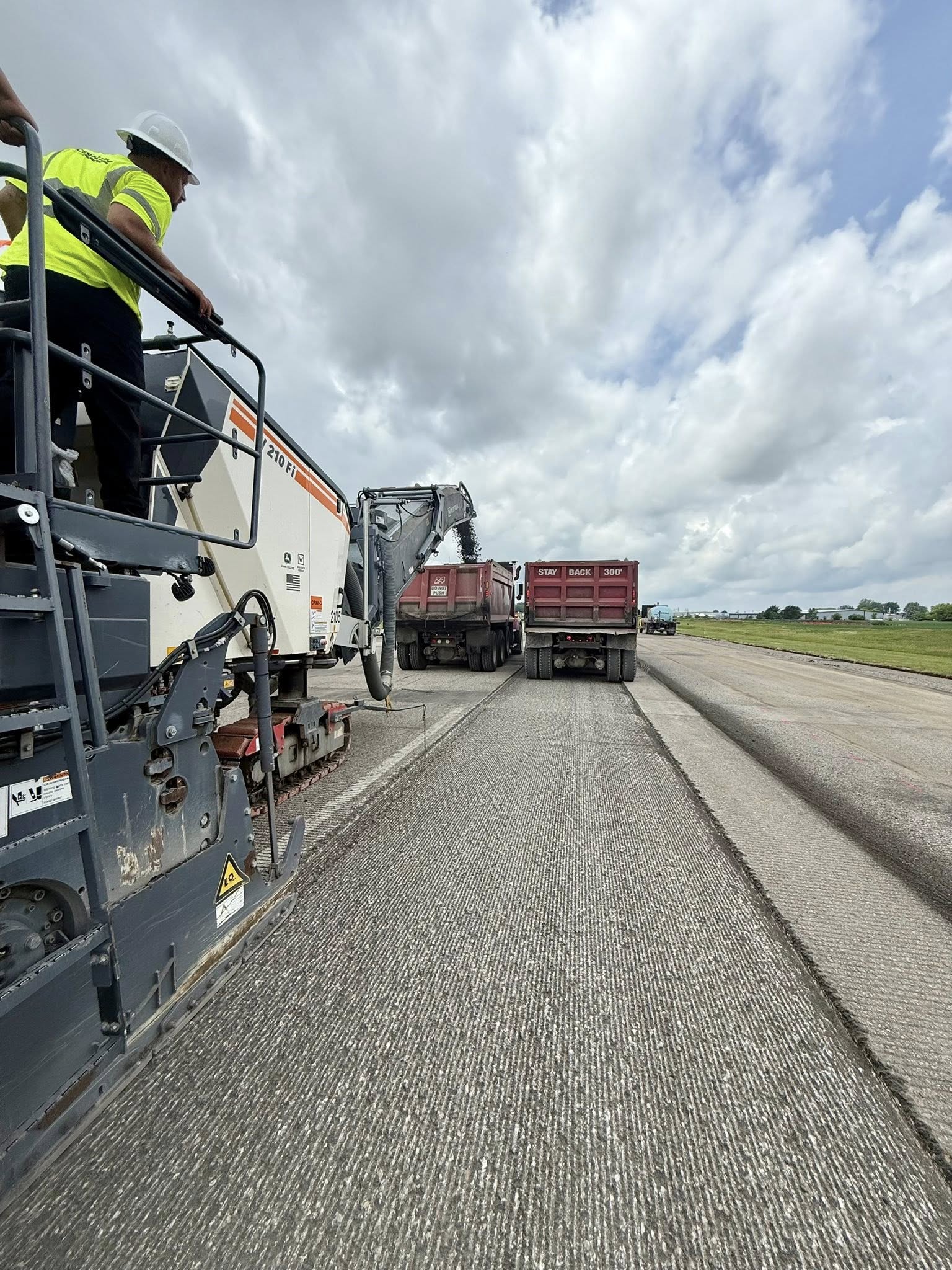
Highway milling, or cold planing, is the controlled removal of a damaged asphalt or concrete road surface to a predetermined depth, slope, and cross-section. The process utilizes a large, rotating mandrel studded with carbide-tipped cutting teeth to pulverize the distressed pavement.
This process successfully removes surface-level defects such as rutting (depressions along the wheel path), shoving (pavement displacement caused by braking forces), and extensive raveling. Instead of creating a smooth, slick surface, the milling drum leaves behind a highly uniform, micro-textured profile. This ribbed texture significantly increases the structural surface area of the roadbed, creating a superior mechanical bond for the incoming hot-mix asphalt overlay.
Our Core Milling Capabilities
High-Production Mainline Profiling & Deep Cuts
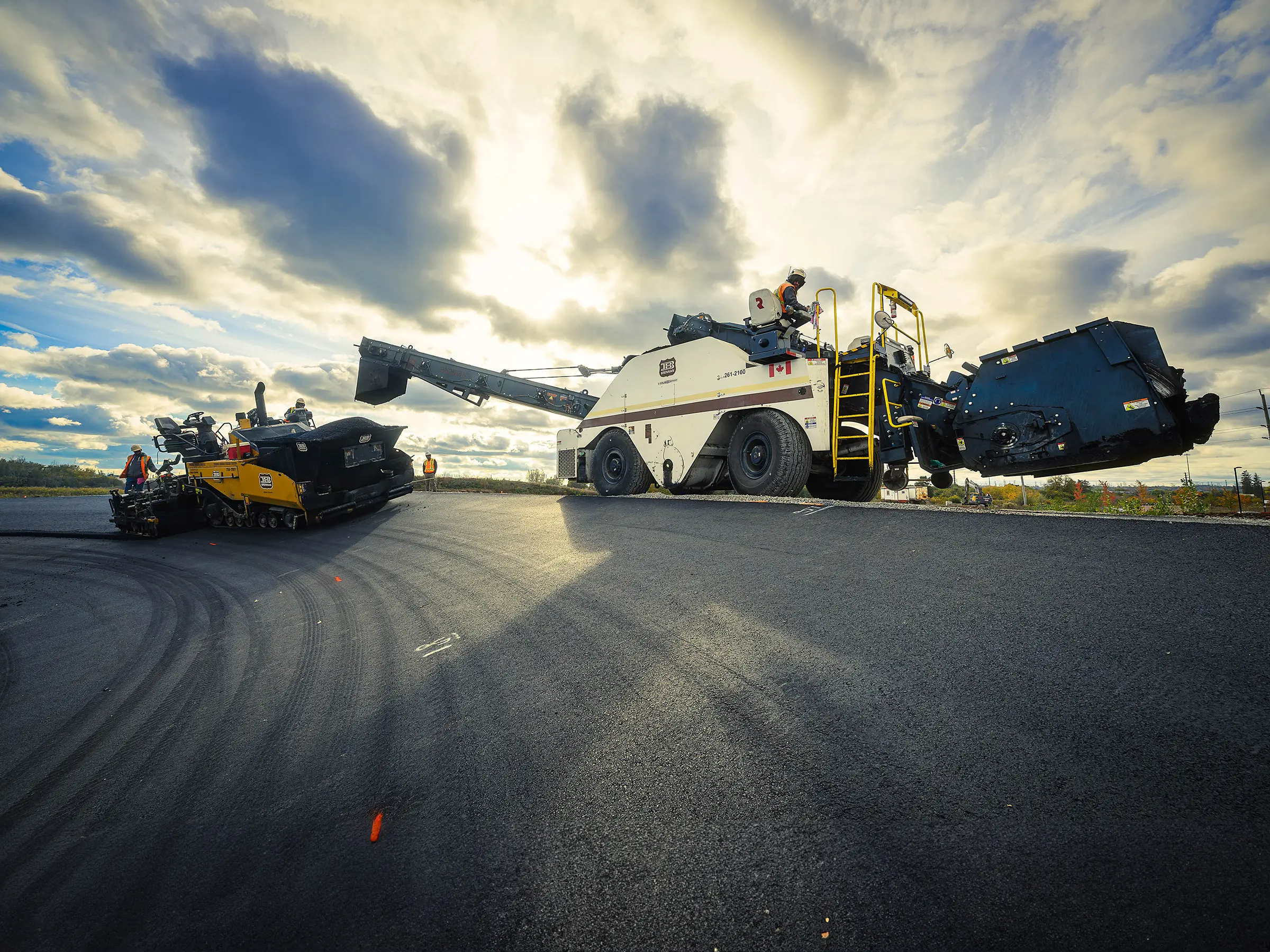
For major arterial roads and multi-lane expressways, our high-production milling operations are engineered to strip away full lane widths in a single pass. We regularly execute deep-cut removals to strip away multiple lifts of compromised asphalt down to the stable aggregate or concrete base. This capability is vital for comprehensive rehabilitation projects where the underlying structural integrity of the highway must be exposed, inspected, and paired with deep asphalt stabilization layers.
Micro-Milling & Friction Restoration
When a highway surface suffers from minor rutting, friction loss, or localized bumps, full-depth removal is unnecessary. Our micro-milling services utilize specialized cutting drums packed with up to three times the number of cutting teeth found on a standard mandrel. This process shaves away a thin layer of pavement—often just a few millimeters—to instantly restore wet-weather skid resistance and tire grip. Micro-milling is also the ideal preparation method for ultra-thin bonded overlays, as it creates an exceptionally smooth ride profile without compromising the road’s structural base.
Variable Depth & Cross-Slope Correction
Decades of traffic and shifting subgrades can deform a highway’s original geometry, leading to dangerous water pooling and poor drainage. Cornerstone Civil Engineering specializes in variable depth milling to correct these systemic issues. By dynamically adjusting the cutting depth as the machine advances, we reshape the roadbed to restore proper crowns, eliminate localized dips, and re-establish the precise cross-slope angles required for safe high-speed vehicle runoff.
Shoulder, Taper, and Safety Rumble Strip Milling
A complete highway rehabilitation project requires meticulous detail work beyond the main travel lanes. We provide precision milling for highway shoulders, bridge deck tie-ins, and complex taper cuts around entrance and exit ramps. Additionally, we deploy specialized utility equipment to mill continuous or intermittent safety rumble strips along the longitudinal shoulders, providing drivers with vital auditory and vibratory warnings to prevent run-off-road accidents.
The Cornerstone Advantage: Why Toronto Chooses Us
Advanced 3D Grade & Slope Control
High-speed transportation corridors leave zero margin for structural error. To guarantee absolute compliance with contractual tolerances, our milling fleet is fully integrated with automated Sonic grade systems and 3D GPS/Total Station grade controls. This technology constantly samples the surrounding pavement geometry and automatically adjusts the milling drum’s depth and slope in real time. The result is a mathematically optimized surface profile that eliminates high spots, corrects long-wave irregularities, and minimizes the amount of leveling-course asphalt required during paving operations.
Engineered for Night Operations & Tight Windows
Closing lanes on the Don Valley Parkway, the Gardiner Expressway, or the 401 requires military-grade operational coordination. Cornerstone Civil Engineering has built its reputation on executing high-output night operations within intensely compressed timeframes. We mobilize our crews with high-intensity mobile lighting plants, dedicated on-site mechanical support, and pre-arranged trucking logistics. By optimizing our load-out speeds, we maximize production during overnight closures and guarantee that the roadway is thoroughly swept, safely ramped, and fully reopened to commuter traffic before the morning rush hour begins.
Sustainable Practices & RAP Management
Infrastructure longevity must go hand-in-hand with environmental responsibility. Every metric ton of asphalt pulverized by our cutting heads is treated as a valuable asset. We ensure that 100% of the Reclaimed Asphalt Pavement (RAP) generated on our job sites is recovered and routed directly to certified recycling facilities. This recovered aggregate and bitumen are processed to feedstock standards for future Ontario hot-mix asphalt production, drastically reducing aggregate mining demands and lowering the carbon footprint of the entire project lifecycle.
Comprehensive Safety & Book 7 Compliance
Working mere feet away from live, high-speed traffic demands unyielding safety protocols. Our field supervisors and equipment operators undergo continuous training in Ontario Traffic Control Trust (Book 7) guidelines. Every project footprint is established in strict alignment with the Infrastructure Health and Safety Association (IHSA) and Ministry of Transportation regulations. From deploying Truck-Mounted Attenuators (crash trucks) to implementing rigorous positive dust-control measures via integrated water-injection systems on our mills, we protect our workers and the driving public with equal vigilance.
Technical Specifications & Fleet Breakdown
We match the physical parameters of our machinery to the geometric constraints of your project to ensure peak mechanical efficiency.
|
Equipment Class |
Operational Drum Width |
Primary Infrastructure Application |
Key Engineering Advantage |
|
High-Production Mills |
2.0 Meters to 2.2 Meters |
Mainline highway profiling, multi-lane expressways, deep-lift removals. |
Maximum volume throughput; high-speed advance rates that maximize lane-kilometer production per shift. |
|
Utility & Compact Mills |
1.0 Meter to 1.2 Meter |
Highway ramps, shoulder tie-ins, urban intersections, and perimeter cuts. |
High maneuverability around concrete barriers, catch basins, and tight radii where large mills cannot track. |
|
Micro-Milling Units |
Specialized Fine-Tooth |
Surface texture restoration, friction adjustments, thin-lift overlay preparation. |
Eliminates long-wave roughness while leaving a highly stable, drivable texture with superior bonding characteristics. |
Our Field Operations Process
01. Engineering Site Assessment
Before our equipment ever arrives on site, our engineering team conducts a thorough review of core samples, ground-penetrating radar data, and municipal specifications. We determine the exact location of underlying utilities, identify concrete bridge deck interfaces, and program the initial depth parameters into our grade control systems to mitigate risk and optimize cutting efficiency.
02. Logistics & Traffic Synchronization
We coordinate closely with regional traffic management authorities and specialized barrier crews. Our logistical planning establishes clear haul routes for our support trucks, sets up protected entry and exit zones within the work window, and ensures that all temporary signage and crash protection assets are deployed seamlessly before operations begin.
03. Precision Milling & Simultaneous Clean-Up
As our cold planers advance, the pulverized asphalt is transferred immediately via an internal conveyor system into a continuous line of haul trucks. Simultaneously, integrated heavy-duty water sprays suppress airborne silica dust at the cutting chamber. Immediately behind the tracks, specialized vacuum sweepers clear residual fines from the grooved pavement, ensuring a clean, tire-safe surface for immediate traffic release if required.
04. RAP Haulage and Quality Assurance
Our logistical chain ensures a continuous cycle of trucks, preventing the milling machines from idling. The extracted RAP is transported to designated storage facilities for recycling. Once a section is completed, our supervisors conduct a final physical inspection, verifying depth tolerances and cross-slope percentages against the project design file to ensure a flawless handover to the paving crew.
Partner with Toronto’s Civil Infrastructure Experts
When civil general contractors, municipal authorities, and provincial bodies require high-capacity, dependable highway milling in the Greater Toronto Area, they rely on Cornerstone Civil Engineering. We bring the advanced fleet, technical oversight, and operational grit necessary to execute complex road rehabilitation projects safely, accurately, and on schedule.
Contact our estimating department today to discuss your upcoming project requirements, review contract specifications, or secure a comprehensive, competitive bid for your infrastructure portfolio.
© Copyright | 2016 All rights reserved.
Design & Development by
